Sony Walkman E436F vs iPod Classic 7th Gen vs NW-A55: Which Should You Buy?
Suppose you bought an older Sony Walkman E436F because you wanted a simple dedicated music player.
Then the frustrations start.
Managing playlists feels awkward. Album artwork is less convenient than expected. The interface feels dated. Four gigabytes of internal storage suddenly seems tiny.
At that point, two very different upgrade ideas usually appear:
buy an iPod Classic for its familiar music-library experience, or stay with Sony and move to a newer Walkman such as the NW-A55.
Those choices solve different problems.
And that means the best replacement depends on what you dislike about the E436F in the first place.
Quick Comparison
| Feature | Sony NWZ-E436F | iPod Classic 160GB Late 2009 | Sony NW-A55 |
|---|---|---|---|
| Era | 2008 generation | 2009 | Later A-series |
| Internal storage | 4 GB | 160 GB HDD | 16 GB |
| Expandable storage | No | No | microSD / SDHC / SDXC |
| Display | 2″, 240×320 | 2.5″, 320×240 | 3.1″, 800×480 |
| Weight | Approx. 50 g | Approx. 140 g | Approx. 99 g |
| Bluetooth | No | No | Bluetooth 4.2 |
| NFC | No | No | Yes |
| Headphone jack | Yes | Yes | Yes |
| FM radio | Yes | No | Yes |
| Hi-Res formats | Limited older-format support | No modern Hi-Res focus | FLAC, ALAC, DSD, AIFF, WAV and more |
| Music battery rating | Up to 45 hrs | Up to 36 hrs | Up to 45 hrs MP3 local playback |
| Navigation | Buttons/menu | Click Wheel | Touchscreen + physical controls |
| Best reason to buy | Tiny, simple legacy player | Huge built-in library + Click Wheel | Modern dedicated offline Walkman |
Sony’s official specification gives the E436F only 4 GB of storage, a 2-inch 240×320 display, a weight of roughly 50 g and up to 45 hours of music playback. It supports drag-and-drop transfer, playlists, FM radio, MP3, AAC, WMA and several video formats.
The late-2009 iPod Classic provides a very different proposition: a 160 GB hard drive, 2.5-inch 320×240 display, Click Wheel navigation and up to 36 hours of rated music playback. Apple says that capacity can hold up to approximately 40,000 128-kbps AAC songs.
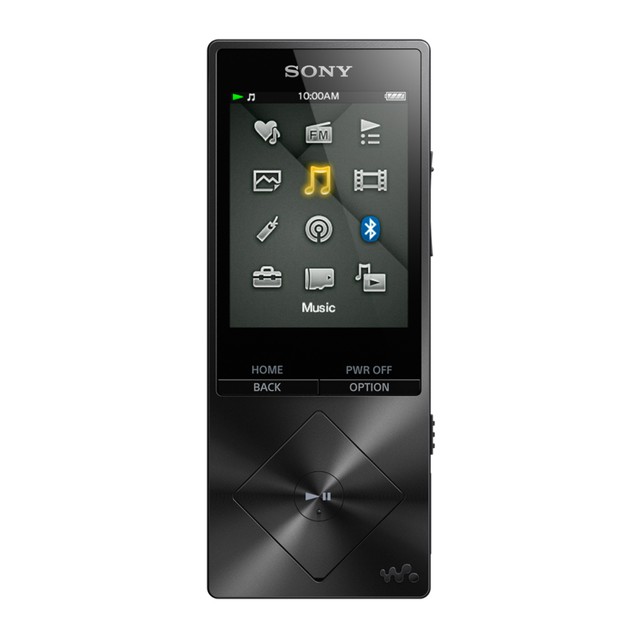
The NW-A55 sits between those two philosophies. It provides 16 GB of internal storage plus microSD expansion, Bluetooth 4.2, a 3.1-inch 800×480 display and much broader high-resolution audio format support.
First: What’s Actually Wrong With the E436F?
The E436F is not necessarily broken when it feels inconvenient today.
It is simply an old design.
Its strengths were compact size, long battery life, physical portability and straightforward local-file playback.
Sony even officially supports playlist searching and drag-and-drop file transfer.
The issue is that a feature being technically supported does not mean its workflow feels modern.
A user with hundreds or thousands of songs may care far more about:
how quickly albums can be browsed, how easily artwork and metadata are managed, how playlists are created, and how painless it is to reorganize a large library.
Those usability differences are precisely where an old MP3 player can become frustrating even while the hardware still functions.
If Your Main Problem Is Storage, the iPod Classic Wins Easily
This comparison is almost unfair.
The E436F has 4 GB.
The late-2009 iPod Classic has 160 GB.
Apple’s specification suggests enough space for as many as 40,000 songs when encoded at 128-kbps AAC.
If your dream is:
“Put my entire offline library on one device and stop thinking about storage,”
the Classic remains extremely attractive.
Its hard drive also creates an experience that modern flash-based players rarely reproduce: one large internal library with no microSD card management.
The disadvantage is equally obvious.
That storage comes from a mechanical hard disk in a device introduced in 2009.
For a used iPod Classic in 2026, condition matters enormously.
Drive health and battery health can matter more than cosmetic appearance.
If Your Main Problem Is Navigation, the iPod Has a Strong Case
There is a reason the Click Wheel remains loved.
It is extremely well suited to scrolling through long music libraries without staring at a touchscreen.
The Classic presents a focused music-device interface rather than trying to behave like a smartphone.
For users dissatisfied with the menu experience of an E436F, the Classic may therefore feel substantially easier to live with.
However, remember that the iPod ecosystem was built around computer synchronization.
Apple’s original specification assumes iTunes-based syncing, and although today’s enthusiasts use various workflows and restored devices, it is still fundamentally a legacy platform.
If you specifically dislike managing a music library through desktop software, the Classic should not automatically be considered the easiest choice.
The NW-A55 Is the Better Upgrade if You Still Like the Sony Philosophy
The NW-A55 solves a different problem.
It preserves the idea of a dedicated Sony music player while removing many of the E436F’s biggest hardware limitations.
Instead of 4 GB fixed storage, you get:
16 GB internally + microSD expansion.
Instead of a 2-inch QVGA screen, you get:
3.1 inches at 800×480.
Instead of wired playback only, you get:
Bluetooth 4.2 and NFC.
And instead of an old collection of compressed-music formats, the A55 supports MP3, WMA, AAC, FLAC, WAV, Apple Lossless, AIFF, DSD, APE and other formats, including high-resolution audio.
For someone asking:
“I like having a Walkman, but I want a much less limiting Walkman,”
the A55 is the most logical of the three.
NW-A55 Has One Important Limitation: It Is Not a Mini Smartphone
This distinction matters in 2026.
The NW-A55 uses Sony’s own operating system rather than Android.
That is a benefit if you want:
local music, long battery life, fewer distractions and a dedicated player.
It is a disadvantage if your actual goal is:
Spotify, Apple Music apps, YouTube Music or other modern streaming services directly on the device.
For that use case, a later Android-based Walkman is more appropriate.
So don’t buy an A55 expecting it to behave like a small Android phone.
Its appeal is almost the opposite.
Which One Is Best for Album Artwork and Playlists?
This is more nuanced than simply checking whether the specification says “playlists supported.”
The E436F supports playlists and JPEG imagery, but its workflow reflects its age.
The iPod Classic was designed around a tightly managed music library, and album browsing, metadata and playlists are central to the iPod experience.
The NW-A55 also provides dedicated search categories for artists, albums, playlists, genres, release year, folders and recently transferred material.
So we would decide like this:
| If you care most about… | Best choice |
|---|---|
| Classic library navigation | iPod Classic |
| Large built-in capacity | iPod Classic |
| microSD expansion | NW-A55 |
| Bluetooth headphones | NW-A55 |
| High-resolution local files | NW-A55 |
| FM radio | E436F or NW-A55 |
| Smallest/lightest body | E436F |
| Modern Sony offline-player experience | NW-A55 |
| Nostalgia / Click Wheel | iPod Classic |
Sound: Don’t Assume “Newer” Automatically Means “Better”
Sound quality comparisons between legacy players are easy to exaggerate.
The headphones you use, file quality, volume matching and personal preference can matter more than internet claims that one old player is universally “warmer,” “cleaner” or “better.”
What we can say objectively is that the NW-A55 was designed for a much wider range of high-resolution formats and includes Sony processing features such as DSEE HX, ClearAudio+, a six-band equalizer and Vinyl Processor.
That gives the A55 significantly more flexibility.
But if your library is mainly ordinary MP3/AAC files and you use efficient headphones, all three can still serve as enjoyable dedicated music players when they are in good working condition.
Battery Condition Matters More Than Original Battery Rating
This is especially important when buying used.
Sony originally rated both the E436F and NW-A55 for up to approximately 45 hours of music under particular conditions, while Apple rated the late-2009 Classic for up to 36 hours.
But those are new-device laboratory ratings.
They tell you very little about a fifteen-year-old player’s battery today.
When choosing a used Walkman or iPod in 2026, we would therefore care more about:
measured current battery runtime
than:
original manufacturer’s battery specification.
This is also why professionally tested renewed players can be more useful than simply finding the cheapest used unit.
[Internal CTA: Shop Tested / Renewed Sony Walkman Players]
This would be an excellent place to link to your current Walkman inventory.
What About Mechanical Reliability?
This is where the iPod Classic requires an additional consideration.
The 160 GB Classic uses a mechanical hard drive. Apple explicitly identifies it as a hard-drive-based model.
The A55 uses flash storage and can expand through microSD.
That does not automatically make every A55 immortal, but it removes the ageing mechanical hard drive from the equation.
Someone buying a Classic specifically for nostalgia may happily accept that trade-off.
Someone who simply wants a dependable daily offline player may prefer the A55 architecture.
Who Should Keep the E436F?
Not everybody needs to upgrade.
The E436F still has a few appealing qualities:
it is tiny, weighs only around 50 g, has physical controls, an FM tuner and excellent original battery specifications.
For running, commuting or keeping a small curated library, simplicity can actually be an advantage.
If you own one and its storage and interface do not bother you, replacing it accomplishes very little.
But if you are already fighting the device every time you organize music, that frustration is unlikely to disappear simply because you learn one more workaround.
Who Should Buy the iPod Classic?
Choose the iPod Classic if your priorities are:
large internal storage, the Click Wheel, straightforward large-library browsing and the classic iPod experience.
It remains unusually compelling for someone with a very large offline collection.
But buy based on the condition of the actual unit, not merely the model name.
A pristine-looking Classic with a worn battery or failing mechanical drive can be a worse purchase than a less perfect-looking but properly serviced example.
Who Should Buy the NW-A55?
The NW-A55 is our choice for someone who says:
“I still want a dedicated offline player, but I don’t want to live with a 2008-era experience.”
It gives you expandable storage, Bluetooth, a better display, wide format support, modern Sony audio processing and long local-playback battery life while avoiding the complexity of an Android-based music player.
It is especially attractive if your dissatisfaction with the E436F is not Sony itself but rather:
storage, interface limitations, format support and connectivity.
Our Verdict
There is no universal winner because these three players represent three different ideas.
The E436F is the minimalist choice.
The iPod Classic 160GB is the library-management and huge-capacity choice.
The NW-A55 is the modern dedicated-player choice.
For most people upgrading specifically from an E436F today, we would choose the NW-A55 first unless the Click Wheel and 160 GB integrated library are major reasons for wanting an iPod.
A simple way to decide is:
Choose the iPod Classic because you specifically want an iPod Classic.
Choose the NW-A55 because you want a better everyday dedicated music player.
That distinction prevents nostalgia and specifications from getting mixed together.
And if your current E436F still does everything you need?
Keep using it. Old technology does not need replacing merely because it is old.
FAQ
Is the Sony NW-A55 still worth buying?
For local offline music, it can still make sense because it supports microSD expansion, Bluetooth, Hi-Res formats and long local playback. It is less suitable for users who want modern streaming apps because it uses Sony’s own operating system rather than Android.
Does the Sony E436F support playlists?
Yes. Sony’s specification lists Playlists as one of its music search methods. The issue for modern users is often workflow and ease of management rather than lack of playlist support itself.
Does the NW-A55 support microSD cards?
Yes. Sony lists support for microSD, microSDHC and microSDXC cards.
Does the iPod Classic have Bluetooth?
The late-2009 160GB model’s official specification lists the Dock connector and 3.5 mm headphone jack, but no built-in Bluetooth.
Is the iPod Classic 160GB really “7th generation”?
That is a common enthusiast name. Apple’s official designation is “iPod classic 160GB (Late 2009)”, model A1238.